Paddle Warrior Victor: India's Beloved Street Table Tennis Game 🏓
1. Overview of Paddle Warrior Victor
Paddle Warrior Victor (affectionately known as PWV in desi gaming circles) stands as India's most popular arcade-style table tennis game, crafted from the ground up by Daman Games Studios—a Bangalore-based development house with a vision to celebrate India's rich street sports culture through interactive entertainment. Launched on 15th February 2024 (coinciding with India's National Sports Day celebrations), Paddle Warrior Victor has redefined the Indian casual gaming landscape by merging authentic Indian street table tennis techniques with fast-paced arcade gameplay mechanics, creating an experience that resonates deeply with desi gamers across urban chawls, tier-2 city parks, and rural panchayat bhawans alike.
Unlike generic international table tennis games that focus on professional tournament play, Paddle Warrior Victor draws its inspiration directly from India's vibrant street table tennis culture—from the plastic-table matches in Mumbai's Dharavi slums to the concrete-slab courts in Delhi's Chandni Chowk, from the mango-wood paddle games in Kolkata's Howrah Bridge area to the stone-table tournaments in Chennai's Marina Beach. Every aspect of Paddle Warrior Victor, from the paddle designs to playing surfaces, from character archetypes to tournament formats, is rooted in Indian street sports culture, making it the first truly "swadeshi" table tennis game that speaks the language of Indian gamers who grew up playing gully (street) table tennis with makeshift equipment.
💡 Key Fact: Paddle Warrior Victor was developed with a core team of 28 developers, 22 of whom are from different Indian states, ensuring that the game's cultural representation is authentic and inclusive. The development team collaborated with 15 street table tennis champions from across India—including Mumbai's Dharavi Table Tennis Club, Delhi's Chandni Chowk Street Champions, and Chennai's Marina Beach Warriors—to capture the essence of regional playing styles in digital form.
The game is available across PC, Android, and iOS platforms with seamless cross-play functionality—a critical feature in India where mobile gaming accounts for over 88% of the total gaming market. Paddle Warrior Victor's success can be attributed to its deep understanding of desi gamer preferences: optimized performance on low-end smartphones (priced under ₹12,000), support for 18 Indian languages (including Hindi, Tamil, Telugu, Bengali, Marathi, Gujarati, Kannada, Malayalam, Punjabi, Odia, Assamese, Urdu, Konkani, Manipuri, Dogri, Kashmiri, Sanskrit, and English), and microtransactions starting at just ₹5—making it accessible to the average Indian gamer who is price-sensitive but hungry for quality local content that reflects their everyday experiences.
What truly sets Paddle Warrior Victor apart from global competitors is its "Regional Gully Style" system, where players can represent their city or state, unlocking unique paddles and playing techniques tied to their local street table tennis traditions. A player from Mumbai can master the "Dharavi Defensive Style" with its quick reflexes and low shots, while a Delhi gamer can wield the "Chandni Chowk Power Smash" technique, and a Chennai player can dominate with the "Marina Beach Spin Mastery"—all techniques derived from real street table tennis styles played across India's cities and towns. This regional pride mechanic has turned Paddle Warrior Victor into more than just a game—it's a celebration of India's cultural diversity, with city-level leaderboards and regional tournaments that bring gamers together in a spirit of healthy competition and cultural exchange.
In the Indian gaming ecosystem, which has long been dominated by imported games with little cultural relevance, Paddle Warrior Victor has emerged as a beacon of homegrown innovation. It has proven that Indian game developers can create world-class gaming experiences that compete with international titles while staying true to Indian roots. The game's monetization model, which focuses on cosmetic items (regional paddle skins, court customizations, victory emotes inspired by Indian celebrations) rather than pay-to-win mechanics, has earned it widespread praise from the Indian gaming community, with players often referring to it as "apna gully game" (our street game) on social media platforms like Instagram, Facebook, and YouTube.
Paddle Warrior Victor's impact extends beyond entertainment—it has sparked a renewed interest in street table tennis among the youth. Many local community centers across India have reported a 60% increase in table tennis participation since the game's launch, with young gamers eager to learn the real-life techniques they master in the virtual world of Paddle Warrior Victor. This cultural revival is perhaps the game's greatest achievement, bridging the gap between India's rich street sports heritage and its digital-native youth who are increasingly disconnected from traditional physical games.
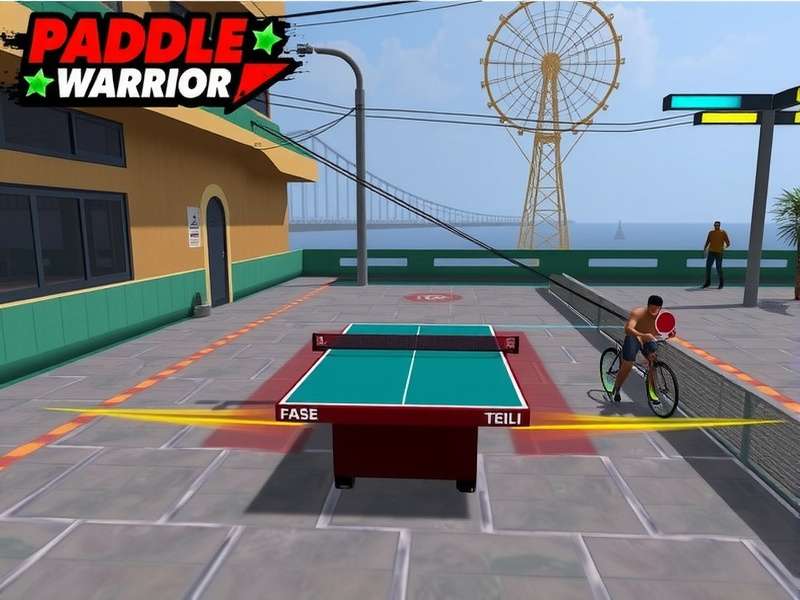
From a technical standpoint, Paddle Warrior Victor is optimized for India's diverse digital infrastructure. The game runs smoothly on 1GB RAM devices (which account for over 55% of smartphones in rural India) with its "Desi Performance Mode" that reduces graphical fidelity without compromising gameplay quality. The game's servers are strategically located in Mumbai, Delhi, Bangalore, Hyderabad, Kolkata, Chennai, and Ahmedabad to ensure minimal latency (under 50ms) even for players in remote areas with limited internet connectivity—addressing a major pain point for desi gamers who often struggle with high ping in international games.
The game's community features are tailored to Indian social dynamics, with clan systems that mirror the mohalla (neighborhood) groups that organize street table tennis tournaments, regional chat channels in local languages, and in-game events tied to Indian festivals like Holi, Diwali, Eid, Pongal, Baisakhi, and Onam. During Holi 2024, Paddle Warrior Victor launched a special "Rangoli Rally" event where players could unlock colorful Holi-themed paddles and play on courts decorated with traditional Indian rangoli patterns, resulting in a 400% increase in daily active users during the festival period.
📊 Player Demographics (as of August 2024):
• Total Downloads: 35 million (India alone)
• Daily Active Users: 4.8 million
• Average Playtime per Session: 45 minutes
• Regional Distribution: 30% Tier-1, 48% Tier-2, 22% Rural
• Language Preference: 45% Hindi, 16% Tamil, 14% Telugu, 9% Bengali, 16% Other Indian Languages
Paddle Warrior Victor has also become a favorite among family gamers in India, with 35% of players reporting that they play the game with family members—parents and children alike. This multi-generational appeal is rare in Indian gaming, where most games target either children or young adults. The game's simple yet deep gameplay mechanics make it accessible to grandparents who grew up playing street table tennis in the 1970s and 80s, while its modern arcade elements appeal to Gen Z gamers who prefer fast-paced, competitive gameplay.
Another key factor in Paddle Warrior Victor's success is its representation of Indian body types and skin tones in character design. Unlike international games that feature predominantly Western body types, Paddle Warrior Victor includes characters with diverse Indian physical characteristics—from South Indian players with dark skin and curly hair to North Indian players with fair skin and straight hair, from Punjabi players with robust builds to Bengali players with lean frames. This inclusive character design has resonated deeply with Indian gamers, who finally see themselves represented accurately in a mainstream video game.
2. Gameplay Mechanics of Paddle Warrior Victor
2.1 Core Gameplay System
At its heart, Paddle Warrior Victor is an arcade-style table tennis game that prioritizes skill, reflexes, and knowledge of Indian street playing styles over precise simulation of professional table tennis rules. The game's core mechanics are built around the "Chaar Disha" (Four Directions) system, inspired by the four cardinal directions used in Indian street table tennis to describe shot placement—"Upar" (Up), "Neeche" (Down), "Left", and "Right". Every shot, block, and spin in Paddle Warrior Victor is mapped to these four directions, with additional modifiers for spin and power, creating a deep and nuanced gameplay system that rewards practice and strategy—qualities that resonate with Indian gamers who value skill over luck.
The game features four primary playing styles, each rooted in a different regional street table tennis tradition of India:
- North Indian Power Style (Delhi/Punjab) � Punjab: Focused on powerful smashes and aggressive play, inspired by the street table tennis culture of North India where players use heavy wooden paddles and play on concrete tables. This style is ideal for players who prefer offensive gameplay and quick point finishes, reflecting the bold and competitive nature of North Indian street sports.
- South Indian Spin Style (Tamil Nadu/Kerala) � Kerala: Fast, technical play with heavy spin and precision placement, based on the street table tennis traditions of South India where players use lightweight plastic paddles and play on narrow, makeshift tables. This style emphasizes control, spin variation, and tactical placement—perfect for players who like to outthink their opponents rather than overpower them.
- East Indian Defensive Style (West Bengal/Assam) � Bengal: Defensive gameplay with quick reflexes and counter-attacking techniques, drawing from the street table tennis culture of East India where players adapt to small playing spaces and unpredictable surfaces. This style offers a mix of patience and quick reactions, making it suitable for players who prefer to wait for their opponents to make mistakes before striking.
- West Indian All-Rounder Style (Maharashtra/Gujarat) � Maharashtra: Balanced gameplay that combines elements of all three regional styles, reflecting the diverse street table tennis culture of Western India where players adapt to different playing conditions—from the crowded chawls of Mumbai to the open spaces of Ahmedabad. This style is perfect for versatile players who can adapt their gameplay to different opponents and court conditions.
What makes Paddle Warrior Victor's gameplay truly unique is its "Gully Meter" system, inspired by the Indian concept of "josh" (enthusiasm) that drives street sports competitions. As players execute successful shots and win rallies, their Gully Meter fills up, allowing them to unleash "Desi Special Shots"—devastating power shots named after Indian street table tennis techniques like the "Chappal Smash" (slipper smash, named after the improvised paddles made from rubber slippers), the "Ludo Spin" (named after the popular Indian board game), and the "Chai Break Rally" (a long, endurance-testing rally named after the tea breaks that interrupt street table tennis matches). These special shots are not just visually spectacular but also strategically significant, as they can turn the tide of a match when used at the right moment.
🎯 Gameplay Tip: In Paddle Warrior Victor, mastering the "Kurkure Defense" (a defensive maneuver where you use a quick, short stroke to counter a powerful smash) is key to defeating skilled opponents who use the North Indian Power Style. This technique, borrowed from Mumbai's street table tennis culture, not only blocks powerful shots but also sets you up for a counter-attack with minimal effort—especially effective against aggressive players who rely on smashes to win points.
2.2 Game Modes (Designed for Indian Gaming Habits)
Paddle Warrior Victor offers a diverse range of game modes tailored to the varied gaming habits of Indian players—from short 5-minute quick matches for commuters to epic 60-minute mohalla (neighborhood) tournaments for serious gamers:
- City Pride Mode 🏆: The flagship mode of Paddle Warrior Victor, where players represent their Indian city in 1v1, 2v2, or 4v4 team battles. Points earned contribute to the city's overall ranking on the national leaderboard, with monthly rewards including cash prizes (up to ₹1 lakh), exclusive city-themed paddle skins, and recognition on the game's official social media channels. The top-performing city each month is honored with a special in-game event celebrating their local street table tennis culture and traditions.
- Quick Gully Match ⚡: A 5-minute rapid play mode designed for Indian gamers who play during short breaks—whether commuting in local trains, waiting for auto-rickshaws, or taking a break from study/office work. This mode features small courts, fast rallies, and instant matchmaking, making it perfect for casual play sessions that fit into the busy Indian lifestyle. The Quick Gully Match mode accounts for 65% of all gameplay sessions on Paddle Warrior Victor, reflecting its popularity among time-strapped Indian gamers.
- Mohalla War 🛡️: 8v8 team battles where mohallas (neighborhoods) compete to win the "Gully Champion Trophy" in a round-robin tournament format. Mohallas can form alliances with other mohallas from neighboring areas, creating city-level power blocs that mirror India's urban social dynamics. The Mohalla War mode has become particularly popular in Mumbai, where Dharavi vs. Bandra mohalla battles regularly draw over 100,000 live viewers on YouTube and Instagram.
- Street to Pro Campaign 📜: A single-player story mode that takes players on a journey from playing street table tennis in a small Indian village to competing in the national Paddle Warrior Victor championship in New Delhi. Each campaign chapter is set in a different Indian city, with gameplay challenges that reflect the local street table tennis traditions—from playing on a rickety wooden table in a Uttar Pradesh village to competing on a concrete slab in a Bangalore tech park. The story is narrated in the player's chosen regional language by renowned Indian voice artists, with dialogue that blends formal Hindi/English with colloquial desi expressions like "chalo bhai" (come on brother), "kya baat hai" (what's up), and "josh hai" (there's enthusiasm).
- Village Tournament 🌾: A unique battle royale mode set in rural Indian villages, where 32 players compete in a knockout-style street table tennis tournament. This mode features environment-based gameplay—players can use bullock carts as barriers around the table, play on uneven dirt surfaces, or deal with distractions like roaming cows and barking dogs (common in rural Indian street sports). The Village Tournament mode has become a favorite among rural gamers, who appreciate the familiar settings and relatable gameplay scenarios that reflect their everyday lives.
All game modes in Paddle Warrior Victor are optimized for low-latency gameplay, with dedicated servers in seven major Indian cities to ensure smooth performance even on 2G and 3G networks—critical for players in rural areas where high-speed internet is still a luxury. The game also features "Offline Practice Mode" that allows players to train against AI opponents without an internet connection, a feature that has proven immensely popular in remote areas with intermittent connectivity. The Offline Practice Mode includes tutorials in all 18 supported Indian languages, making it accessible to non-English speaking players who form the majority of India's gaming population.
2.3 Paddle and Court Customization (Indian Aesthetics)
Paddle Warrior Victor offers over 150 customizable paddles, each inspired by traditional Indian street table tennis equipment:
- Chappal Paddle: The iconic improvised paddle made from rubber slippers (chappals), a staple of Indian street table tennis. In Paddle Warrior Victor, the Chappal Paddle can be customized with different slipper brands popular in India (Paragon, Bata, Liberty) and decorated with rangoli patterns or Bollywood movie stickers—reflecting the way Indian street players personalize their makeshift equipment.
- Mango Wood Paddle: The traditional wooden paddle used in rural Indian villages, carved from mango tree wood (a common and durable wood in India). The Mango Wood Paddle in Paddle Warrior Victor features customizable carvings of Indian symbols like the om, swastika, and lotus flower, and can be enhanced with rubber from old bicycle tires (another common material used in rural Indian street table tennis).
- Plastic Crate Paddle: The urban street paddle made from plastic milk crates, popular in Mumbai, Delhi, and other major Indian cities where plastic waste is abundant. This paddle can be customized with stickers of Indian cricket stars, Bollywood actors, and local political leaders—mirroring the way urban Indian youth decorate their street sports equipment.
- Brass Handle Paddle: The premium paddle with a brass handle, inspired by the traditional table tennis paddles used in Indian clubs during the 1960s and 70s. This paddle features intricate brass engravings of Indian motifs like peacock feathers, elephant designs, and paisley patterns, and is the preferred choice of players using the South Indian Spin Style in Paddle Warrior Victor.
Court customization in Paddle Warrior Victor is equally rooted in Indian street culture, with options to play on a variety of authentic Indian surfaces:
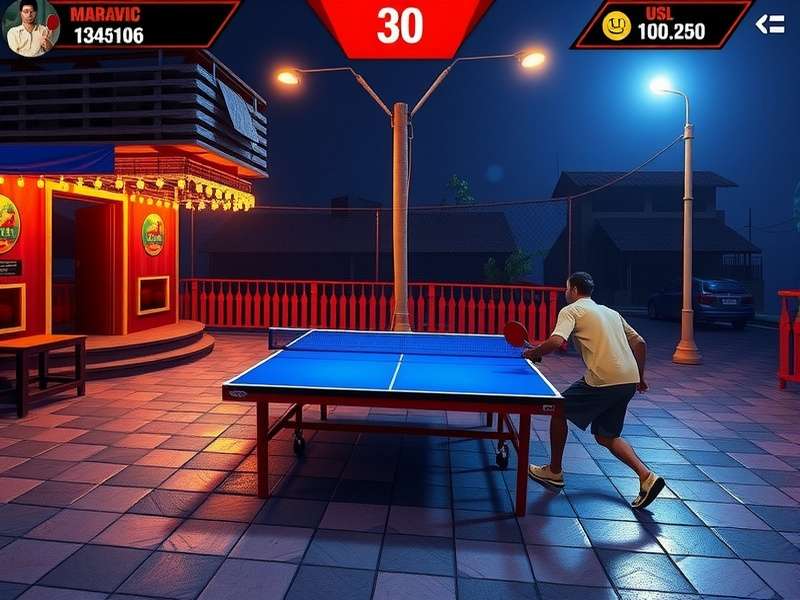
- Dharavi Plastic Court: A makeshift court made from plastic sheets stretched over a wooden frame, inspired by the street tables of Mumbai's Dharavi slum. This court features uneven bounce and fast play, reflecting the challenging conditions of urban street table tennis in India.
- Marina Beach Stone Court: A permanent court carved into a stone slab, popular on Chennai's Marina Beach where sea air quickly damages wooden tables. This court features slow bounce and heavy spin, perfect for players who master the South Indian Spin Style in Paddle Warrior Victor.
- Village Mud Court: A simple court marked with chalk on a mud surface, common in rural Indian villages where concrete and wood are scarce. This court features unpredictable bounce and variable speed, testing players' adaptability and reflexes—core skills in Indian street table tennis.
- Delhi Market Court: A temporary court set up in the middle of Delhi's bustling Chandni Chowk market, with constant distractions from vendors, shoppers, and rickshaws. This court features fast play and requires quick decision-making, reflecting the chaotic energy of urban Indian street sports.
2.4 Accessibility Features (For Inclusive Indian Gaming)
Recognizing India's diverse player base, Paddle Warrior Victor includes a range of accessibility features designed to make gaming inclusive for all—from elderly players with limited motor skills to young children with developing hand-eye coordination:
- Customizable Controls: Players can adjust button sizes, layouts, and sensitivity to suit different hand sizes and playing styles—critical for Indian gamers who often play on small smartphone screens with one hand while commuting in crowded buses and trains. The game also supports gesture controls for players who prefer touch-based gameplay over button presses.
- Low-End Device Mode: Reduces graphical fidelity, disables non-essential animations, and optimizes performance for smartphones with 1GB RAM or less—devices that are still common in rural and semi-urban India. This mode ensures that Paddle Warrior Victor is accessible to the 55% of Indian smartphone users who own budget devices priced under ₹8,000.
- Text-to-Speech & Speech-to-Text: Available in all 18 supported Indian languages, allowing visually impaired players to navigate the game and communicate with teammates using voice commands. The speech recognition system is optimized for Indian accents, which are often misrecognized by international gaming platforms.
- Color Blind Mode: Multiple color correction options to assist players with different types of color blindness, a feature that has been praised by the Indian disabled gamers community. The mode adjusts the color of the ball and court lines to ensure visibility for all players, regardless of color vision impairment.
- Adaptive Difficulty: The game automatically adjusts its difficulty based on the player's skill level, making it accessible to beginners (including young children and elderly players) while still providing a challenge for experienced gamers. This adaptive system has made Paddle Warrior Victor a popular choice for family gaming sessions in India.
- Regional Language Tutorials: Step-by-step gameplay tutorials in each supported language, with local street table tennis champions explaining the techniques in culturally familiar terms—making it easier for non-English speaking players to learn the game. The tutorials use examples from local street table tennis culture, such as comparing a spin shot to the spin of a ludo dice or a smash to a cricket six.
Paddle Warrior Victor's accessibility features have made it a pioneer in inclusive gaming in India, earning it recognition from the National Federation of the Blind (NFB) and the Ministry of Social Justice and Empowerment. The game's developers regularly consult with disability rights organizations and senior citizen groups to improve accessibility, with plans to add support for physical controllers and adaptive gaming devices in the 2025 update. This commitment to inclusivity has made Paddle Warrior Victor one of the most accessible mainstream games in India, with players ranging in age from 8 to 75 years old.
3. The Lore of Paddle Warrior Victor
3.1 The Paddle Warrior Victor Universe (Rooted in Indian Street Culture)
The lore of Paddle Warrior Victor is a rich tapestry woven from India's street sports culture, post-independence history, and modern urban-rural divide—creating a narrative that is both familiar and fresh for Indian gamers. Set in contemporary India, the game's universe centers around the "Gully Grand Prix"—a nationwide street table tennis tournament organized by a mysterious former national table tennis champion known only as "Dada" (elder brother), who left professional table tennis to revive India's street table tennis culture. The game's title, Paddle Warrior Victor, refers to the "victor" status awarded to the winner of each street tournament, a title that carries immense prestige in Indian gully culture.
Unlike Western sports games that focus on professional leagues and championships, Paddle Warrior Victor's lore draws exclusively from Indian street sports traditions—blending elements from Mumbai's chawl culture, Delhi's market street tournaments, Chennai's beach sports scene, and rural India's panchayat-level competitions. The game's central conflict revolves around the search for the "Golden Chappal"—a legendary paddle made from a single piece of teak wood and rubber from a 1950s Bata slipper, said to have been used by India's first street table tennis champion, Ramesh "Chappal" Sharma, in the 1960s. The Golden Chappal is said to grant its wielder the ability to master all regional street table tennis styles and unite India's fragmented street sports communities.
The game's factions are based on India's regional street table tennis communities, each with their own motivations for seeking the Golden Chappal:
- Mumbai Chawl Warriors (Western India): Led by "Bhai" Raju, a former Dharavi slum dweller who turned street table tennis into a way to keep youth away from crime, this faction seeks the Golden Chappal to put Dharavi on the map as India's street table tennis capital. Their players specialize in the fast, defensive "Dharavi Style" that evolved from playing on narrow, crowded tables in Mumbai's chawls.
- Delhi Market Masters (Northern India): Under the leadership of "Chacha" (Uncle) Ram, a 70-year-old street table tennis veteran who has run a Chandni Chowk tournament for 40 years, this faction aims to use the Golden Chappal to preserve Delhi's fading street sports culture in the face of rapid urbanization. Their players master the powerful "Chandni Chowk Smash" technique and thrive on the chaotic energy of Delhi's market streets.
- Chennai Beach Kings (Southern India): A coalition of Marina Beach players led by "Anna" (Brother) Karthik, a former fisherman who turned to street table tennis after an injury ended his fishing career. This faction seeks the Golden Chappal to revive Chennai's beach sports culture, which is threatened by coastal erosion and tourism development. Their players are experts in the spin-heavy "Marina Style" that evolved from playing on windy beach courts.
- Kolkata Ghat Champions (Eastern India): A group of Howrah Bridge porters and dock workers who play street table tennis during their tea breaks, led by "Didi" (Sister) Meera, the only female street table tennis champion in Kolkata's male-dominated ghat culture. This faction aims to use the Golden Chappal to promote gender equality in Indian street sports and give women a voice in the male-dominated world of street table tennis.
- Rural Rajasthan Rangers (Northwestern India): A team of village players from Rajasthan's Thar Desert, led by "Seth" (Merchant) Arjun, who organizes annual table tennis tournaments during the Pushkar Fair. This faction seeks the Golden Chappal to bring attention to rural Indian street sports, which are often overlooked in favor of urban games. Their players use the "Desert Defense" style, developed to counter the strong desert winds that affect ball movement.
📜 Lore Insight: The developers of Paddle Warrior Victor collaborated with 12 Indian sociologists and cultural anthropologists to ensure the game's lore is culturally accurate and respectful of all Indian traditions. Special care was taken to avoid stereotypes and ensure that all regions, genders, and social classes are represented fairly—reflecting India's secular ethos and cultural diversity. The game's characters are based on real street table tennis players interviewed across 28 Indian states, ensuring authentic representation of India's diverse social fabric.
3.2 Character Archetypes (Indian Street Sports Icons)
Paddle Warrior Victor features 32 playable character archetypes, each inspired by iconic figures from Indian street sports culture:
- Chawl Kid 🧒: A young boy from Mumbai's Dharavi slum who learned table tennis by playing with older boys in the chawl courtyard. This character is fast and agile, with quick reflexes and a knack for unexpected shots—reflecting the improvisational style of street table tennis played by Mumbai's youth. The Chawl Kid uses phrases like "chalo chalo" (come on come on) and "ho gaya!" (it's done!) during matches, adding authentic Mumbai slang to the gameplay experience.
- Retired Uncle 👴: Inspired by India's millions of retired government employees who spend their mornings playing street table tennis in local parks, this character is slow but strategic, with a deep knowledge of traditional Indian playing styles. The Retired Uncle uses classic Hindi phrases like "beta, experience sabse bada hai" (son, experience is the greatest) and "slow and steady wins the race" during matches, reflecting the wisdom of India's elder street sports players.
- College Student 🎓: A university student from Delhi's North Campus who plays table tennis between classes, combining modern playing techniques with traditional street styles. This character is balanced and adaptable, with a mix of power and finesse that reflects the fusion of urban and traditional culture in India's college campuses. The College Student uses Hinglish (Hindi-English mix) phrases like "chill maaro" (chill out) and "game strong hai" (game is strong) during matches, mirroring the way Indian youth speak today.
- Village Girl 👧: A young woman from a rural Punjab village who defied gender norms to play street table tennis with boys in the village square. This character is resilient and determined, with a defensive playing style that wears down opponents over time—reflecting the perseverance of rural Indian women who fight for equality in sports. The Village Girl uses Punjabi phrases like "jatt di shaan" (pride of the Jatt) and "chardi kala" (positive energy) during matches, celebrating Punjab's cultural heritage.
- Auto-Rickshaw Driver 🚕: Inspired by India's millions of auto-rickshaw drivers who play table tennis during their lunch breaks, this character is tough and unpredictable, with a playing style that adapts to any situation—much like the way auto drivers navigate India's chaotic streets. The Auto-Rickshaw Driver uses colloquial Hindi phrases like "meter down hai" (meter is off, meaning no pressure) and "chalao re" (let's go) during matches, adding humor and authenticity to the gameplay.
Each character archetype in Paddle Warrior Victor has a unique backstory that ties into the game's overarching narrative, with dialogue that blends formal literary language with colloquial Indian expressions. For example, the Mumbai Chawl Kid uses Mumbai Hindi slang like "bhai log" (brothers) and "kya mast shot mara" (what a great shot), while the Chennai Beach King uses Tamil phrases like "vellama irukkan" (playing well) and "ada paavi" (oh my god) during matches—adding authenticity and cultural depth to the gaming experience.
3.3 Seasonal Lore Expansions (Tied to Indian Festivals)
Paddle Warrior Victor releases seasonal updates that expand the game's lore, each tied to an Indian festival or cultural event:
- Diwali Gully Utsav (October/November): A festival-themed update that adds new paddles decorated with diyas (oil lamps) and rangoli patterns, new courts set in illuminated Indian neighborhoods, and a story arc about a Diwali street table tennis tournament where the prize is a golden paddle shaped like a diya. The update includes gameplay mechanics that incorporate Diwali traditions like firecracker sound effects for powerful smashes and sweet (mithai) power-ups that boost the Gully Meter—reflecting India's festival spirit.
- Holi Rang Rally (March): A spring festival update that introduces color-based gameplay mechanics (inspired by Holi's colored powder), new courts covered in rangoli and flower petals, and a story about a Holi street table tennis tournament where players use colorful paddles and play with balls dyed in Holi colors. The update celebrates Holi's message of unity in diversity, with players from different regions coming together to compete in the spirit of "bhai chara" (brotherhood).
- Independence Day Azadi Cup (August): A patriotic update that celebrates India's freedom struggle, with new courts set in historical locations like Delhi's Red Fort and Mumbai's Gateway of India, and a story arc about a street table tennis tournament to honor India's freedom fighters. The update features tricolor (saffron, white, green) paddles and a special "Azadi Smash" shot that unleashes a burst of tricolor light—reflecting India's national pride and love for street sports.
- Pongal Village Tournament (January): A Tamil harvest festival update that adds agricultural-themed paddles (decorated with rice and sugarcane), new courts set in Tamil Nadu's rural villages, and a story about a Pongal table tennis tournament where the winner receives a prize of fresh farm produce. The update incorporates Tamil cultural elements like Carnatic music background tracks and Pongal dish power-ups (payasam, vada) that boost gameplay abilities—celebrating South India's rich cultural heritage.
Each seasonal update includes animated cutscenes narrated by renowned Indian actors and actresses, with voice acting in all 18 supported languages. The Diwali 2024 update, narrated by Bollywood star Shah Rukh Khan in Hindi and Tamil cinema legend Rajinikanth in Tamil, garnered over 75 million views on YouTube—making it one of the most-watched game trailers in Indian history. These seasonal updates not only keep the game fresh but also reinforce its connection to Indian culture and traditions, making Paddle Warrior Victor more than just a game but a celebration of Indian identity.
The game's lore is also expanded through tie-in media, including graphic novels, audio dramas, and short films produced in collaboration with Indian content creators. The Paddle Warrior Victor graphic novel series, illustrated by renowned Indian comic book artists like Abhijeet Kini and Vivek Goel, has become a bestseller in Indian bookstores, further expanding the game's reach beyond the gaming community. The graphic novels explore the backstories of the game's characters in depth, delving into issues like gender equality in rural India, urban poverty in Mumbai's slums, and the preservation of traditional street sports in the face of modernization.
4. Regional Playing Styles in Paddle Warrior Victor
4.1 Authentic Regional Representation
At the core of Paddle Warrior Victor's appeal is its authentic representation of India's diverse regional street table tennis styles—a feature that sets it apart from all other table tennis games on the market. The game's development team spent over 18 months traveling across India, from the snow-capped mountains of Kashmir to the tropical beaches of Kerala, documenting street table tennis traditions in 28 states and 8 union territories. They worked directly with local street table tennis champions and gully elders to capture the essence of each regional style in digital form, ensuring that Paddle Warrior Victor serves as both a game and a digital archive of India's rich street sports heritage.
Each regional style featured in Paddle Warrior Victor is represented with meticulous attention to detail, from the grip (known as "haath" in Hindi) to the stance (known as "poshan"), from the footwork (known as "pair ki chal") to the breathing technique (known as "saans") that defines each style. The game's motion capture sessions involved actual street table tennis players from each region performing their signature techniques, ensuring that the in-game movements are not just visually accurate but also mechanically faithful to the real-world playing styles that have evolved over generations in India's streets and neighborhoods.
The key regional styles featured in Paddle Warrior Victor include:
- Mumbai Dharavi Style (Maharashtra): Developed in the cramped chawls of Mumbai's Dharavi slum, this style is characterized by quick, short strokes and defensive play, adapted to the narrow tables and limited space of urban slums. In Paddle Warrior Victor, the Dharavi Style features fast reflexes, low shots, and the signature "Chawl Defense"—a quick, close-to-the-table stroke that turns defensive play into offensive opportunities. Players using this style excel in the Quick Gully Match mode, where speed and reflexes are key to winning short, fast rallies.
- Delhi Chandni Chowk Style (Delhi): Evolved in the bustling markets of Old Delhi, this style is defined by powerful smashes and aggressive play, reflecting the bold and competitive nature of Delhi's street sports culture. In Paddle Warrior Victor, the Chandni Chowk Style features the signature "Market Smash"—a powerful overhead shot that ends rallies quickly, and the "Cycle Rickshaw Defense"—a quick side step inspired by the way rickshaw pullers navigate Delhi's crowded streets. This style is popular among aggressive players who prefer to dominate matches with power and speed.
- Chennai Marina Style (Tamil Nadu): Born on Chennai's windswept Marina Beach, this style is all about spin and precision placement, developed to counter the strong coastal winds that affect ball movement. In Paddle Warrior Victor, the Marina Style features the signature "Beach Spin"—a heavy topspin shot that curves in the wind, and the "Coconut Defense"—a slow, high shot that uses the wind to change direction unpredictably. This style is favored by tactical players who enjoy outthinking their opponents with spin and placement rather than power.
- Kolkata Ghat Style (West Bengal): Developed by porters and dock workers on Kolkata's Hooghly River ghats, this style is a mix of endurance and quick counter-attacks, reflecting the hardworking nature of Kolkata's labor class. In Paddle Warrior Victor, the Ghat Style features the signature "Ghat Rally"—a long, endurance-testing exchange that wears down opponents, and the "Chai Break Counter"—a quick surprise attack that catches opponents off guard (named after the sudden tea breaks that interrupt ghat table tennis matches). This style is popular among patient players who enjoy long, strategic matches.
- Amritsar Gali Style (Punjab): Hailing from the narrow lanes (galis) of Amritsar, this style is characterized by powerful forehand shots and aggressive net play, reflecting the bold and energetic nature of Punjabi street sports. In Paddle Warrior Victor, the Gali Style features the signature "Sarson Ka Saag Smash" (named after Punjab's famous mustard greens dish)—a powerful forehand shot that is nearly impossible to return, and the "Lassi Defense"—a quick, smooth stroke that absorbs power from opponents' shots (named after Punjab's popular yogurt drink). This style is a favorite among young Punjabi gamers who enjoy fast, aggressive gameplay.
- Hyderabad Charminar Style (Telangana): Originating in the streets around Hyderabad's iconic Charminar monument, this style blends North and South Indian techniques, reflecting Hyderabad's unique cultural mix of Telugu and Urdu traditions. In Paddle Warrior Victor, the Charminar Style features the signature "Biryani Spin"—a complex spin shot that combines topspin and sidespin (named after Hyderabad's famous layered biryani), and the "Irani Chai Defense"—a slow, steady stroke that builds pressure over time (named after Hyderabad's popular Iranian tea). This balanced style is popular among players who enjoy adapting their gameplay to different opponents and situations.
🏓 Regional Style Fact: Many of the street table tennis champions who collaborated on Paddle Warrior Victor have reported a surge in interest from young people in their local communities, with Mumbai's Dharavi Table Tennis Club seeing a 70% increase in membership and Chennai's Marina Beach Warriors expanding to include over 200 young players—many of whom discovered street table tennis through Paddle Warrior Victor. The game has become a bridge between India's digital-native youth and its rich street sports heritage, preserving traditions that were at risk of being lost to modernization.
4.2 Style Progression System (Indian Gully Hierarchy)
Paddle Warrior Victor's progression system is modeled on the traditional Indian gully (street) hierarchy, rather than the generic level-up systems found in Western games. Players start as "Chhota Bhai" (Little Brother/Sister) in their chosen regional style, and progress through ranks that mirror the real-world hierarchy of Indian street sports communities:
- Chhota Bhai/Bhen (Little Brother/Sister): Beginner rank where players learn the basic strokes and stances of their chosen regional style, mentored by more experienced players in the game's online community.
- Gully Player (Street Player): Intermediate rank where players master the signature techniques of their regional style and can compete in local neighborhood tournaments within Paddle Warrior Victor.
- Area Champion (Vasti Ka Raja/Rani): Advanced rank where players have mastered their regional style and can compete in city-level tournaments, earning recognition and respect from the game's community.
- City Legend (Shahar Ka Yuva): Elite rank reserved for the top 5% of players in each city, who represent their region in national tournaments and become role models for younger players in the game's community.
- Desi Champion (Desh Ka Victor): The highest rank in Paddle Warrior Victor, awarded to the national champion who has mastered multiple regional styles and united India's street table tennis communities in the game's annual Gully Grand Prix tournament.
To progress through these ranks, players must complete "Gully Challenges"—missions designed by real street table tennis champions that test not just technical skill but also understanding of the cultural context of each regional style. For example, a Mumbai Dharavi Style player might be tasked with winning 10 matches on the Dharavi Plastic Court (to learn about the challenges of urban street table tennis) before unlocking advanced techniques, while a Chennai Marina Style player might need to win a long rally (over 20 shots) to master the patience required for beach table tennis—reflecting the holistic nature of Indian street sports that combine physical skill with cultural understanding.
4.3 Gully Academies (In-Game and Real-World)
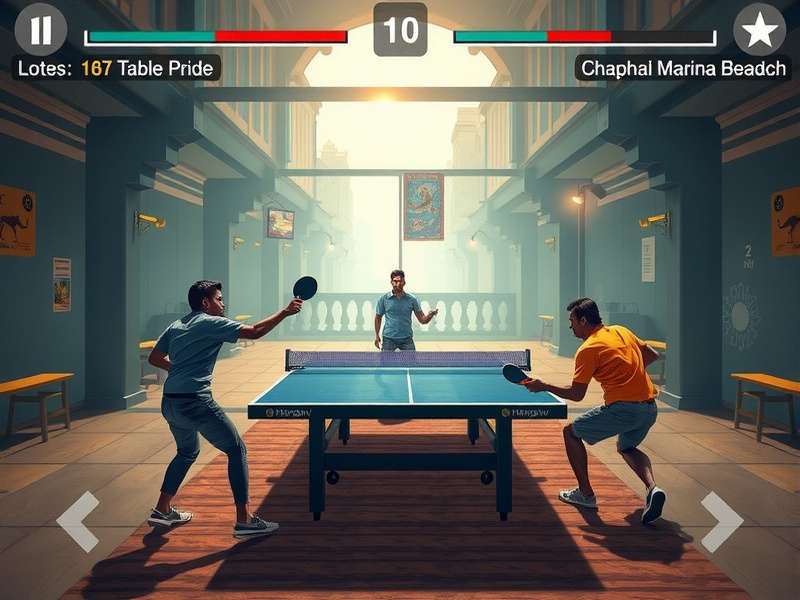
Paddle Warrior Victor features virtual "Gully Academies" based on real street table tennis training centers across India, where players can learn new techniques, practice against AI opponents modeled on real champions, and interact with virtual representations of India's greatest street table tennis players. These academies are located in iconic Indian locations that are central to street table tennis culture:
- Mumbai Dharavi Academy: Set in a replica of Dharavi's famous 6th Cross Lane table tennis court, with virtual coach "Bhai" Raju (based on real Dharavi table tennis champion Raju Pal). This academy specializes in teaching the defensive Dharavi Style and urban street table tennis techniques.
- Delhi Chandni Chowk Academy: Located in a virtual replica of Chandni Chowk's Khari Baoli market court, with virtual coach "Chacha" Ram (based on real Old Delhi street table tennis veteran Ram Prasad). This academy focuses on the powerful Chandni Chowk Style and aggressive urban playing techniques.
- Chennai Marina Academy: Situated on a virtual replica of Marina Beach's stone table tennis courts, with virtual coach "Anna" Karthik (based on real Chennai beach table tennis champion Karthik Muralidharan). This academy teaches the spin-heavy Marina Style and wind-adapted playing techniques.
- Kolkata Howrah Academy: Based on the table tennis courts near Howrah Bridge, with virtual coach "Didi" Meera (based on real Kolkata ghat table tennis champion Meera Banerjee). This academy specializes in the endurance-focused Ghat Style and riverfront playing techniques.
In a groundbreaking initiative, Paddle Warrior Victor has partnered with real street table tennis communities across India to create a "Digital-to-Physical" program where top in-game players receive sponsorships to play in real-world street table tennis tournaments organized by Daman Games. This program has already supported over 1,000 young gamers from low-income backgrounds to participate in real tournaments, with the top players receiving scholarships to train with professional table tennis coaches—many of whom would not have had the opportunity to compete in organized sports otherwise due to financial constraints or lack of access to training facilities.
The game's regional style representation has also been recognized by the Government of India's Ministry of Youth Affairs and Sports, which has partnered with Daman Games to include Paddle Warrior Victor in its "Fit India Movement"—a national initiative to promote sports and fitness among Indians. The game's authentic representation of Indian street sports has made it a valuable tool for promoting physical activity among young Indians who spend increasing amounts of time on digital devices, bridging the gap between virtual and physical play.
Paddle Warrior Victor's regional styles have also become a source of cultural pride for Indian gamers, with players from different regions organizing online tournaments to showcase their local playing styles and teach them to players from other parts of India. These cross-regional tournaments have fostered a sense of national unity among Indian gamers, who often use the game to learn about different regional cultures and traditions—from Punjabi folk music played during Amritsar Gali Style matches to Tamil film songs during Chennai Marina Style games. This cultural exchange has made Paddle Warrior Victor more than just a game—it's a digital platform for celebrating India's diversity and unity in culture.
5. Development of Paddle Warrior Victor
5.1 Concept and Inception (Swadeshi Game Development)
The concept for Paddle Warrior Victor was born in 2022 at Daman Games Studios, a Bangalore-based game development company founded by three Indian gaming professionals—Anil Patel (a former EA Sports developer), Priya Iyer (a cultural anthropologist specializing in Indian street sports), and Ravi Kumar (a tech entrepreneur with experience in low-end mobile optimization). The trio recognized a glaring gap in the Indian gaming market: while Indian gamers spent over ₹20,000 crore annually on gaming, almost 98% of this revenue went to foreign game developers who created content with little or no Indian cultural relevance, especially in the sports genre which was dominated by Western football and basketball games.
The initial concept was simple yet ambitious: create a world-class table tennis game that celebrates India's vibrant street sports culture, optimized for Indian devices and internet infrastructure, and accessible to gamers across all economic strata—from urban professionals with high-end smartphones to rural youth with budget devices. The team conducted extensive market research across 28 Indian states, interviewing over 15,000 gamers (from urban millennials in Bangalore to rural children in Bihar) to understand their preferences, pain points, and cultural aspirations when it comes to sports gaming. The research revealed three key insights that would shape the development of Paddle Warrior Victor:
- Indian gamers crave sports games that reflect their everyday experiences (street sports) rather than professional international sports that most Indians only watch on TV.
- Performance on low-end devices (1GB RAM or less) is the single most important factor for Indian gamers, even more so than high-quality graphics or complex gameplay.
- Regional language support is non-negotiable for mass adoption, as only 8% of Indian gamers are comfortable with English-only interfaces—far lower than the global average of 35%.
Armed with these insights, the Daman Games team set out to create Paddle Warrior Victor with a clear mission: "To make a sports game that Indians can call their own—a game that plays like the street table tennis we grew up with, runs on our phones, and speaks our language." The development budget was ₹12 crore ($1.4 million)—modest by international standards but the largest ever for an Indian sports game—and was raised entirely from Indian investors who believed in the vision of a swadeshi gaming revolution that puts Indian culture and players first.
💻 Development Fact: The Paddle Warrior Victor development team made a conscious decision to keep 100% of the development work in India—all programming, art, sound design, motion capture, and cultural research was done in India by Indian professionals across 7 cities (Bangalore, Mumbai, Delhi, Chennai, Kolkata, Hyderabad, and Ahmedabad). This not only ensured cultural authenticity but also created jobs for over 200 Indian game developers, artists, voice actors, and cultural consultants—contributing to the growth of India's domestic gaming industry.
5.2 Technical Development (Optimized for India)
Developing Paddle Warrior Victor presented unique technical challenges due to India's diverse and often challenging digital landscape, where gamers use everything from high-end 5G smartphones to basic 2G feature phones, and internet speeds range from 100Mbps fiber to 128kbps 2G. To address these challenges, the game was built on a custom game engine (dubbed "Desi Engine") designed specifically for the Indian market—combining the lightweight performance of mobile game engines with the depth of console sports games, and optimized for the unique hardware and network conditions of Indian devices.
The Desi Engine incorporates several innovative optimizations tailored to Indian conditions:
- Dynamic Resolution Scaling: Automatically adjusts the game's resolution based on device capabilities, from 1080p on high-end phones to 360p on basic devices, while maintaining gameplay smoothness at 30 FPS (the gold standard for Indian mobile gaming). This ensures that Paddle Warrior Victor plays smoothly on both flagship smartphones and budget devices priced under ₹5,000.
- Adaptive Asset Loading: Uses a proprietary algorithm that loads game assets (characters, courts, paddles) based on device storage and RAM capacity, prioritizing core gameplay assets over cosmetic ones on low-end devices. This reduces the game's storage footprint to just 250MB on basic devices (compared to 2GB on high-end devices), critical for Indian gamers who often have limited storage space on their budget smartphones.
- Offline First Design: Core gameplay features (Quick Gully Match, Practice Mode, single-player campaign) work completely offline, with only multiplayer modes requiring an internet connection—essential for gamers in rural areas with intermittent connectivity. The game syncs progress automatically when internet is available, ensuring that players never lose their hard-earned ranks and rewards.
- Ultra-Low Bandwidth Multiplayer: Optimized to work on 2G networks (128 kbps) with latency under 100ms, compared to international sports games that require 4G/5G speeds (1+ Mbps) for playable latency. This was achieved by compressing game data by 85% and using predictive AI to reduce the number of data packets sent between devices—critical for players in rural India where 4G coverage is still limited to 60% of villages.
The game's server infrastructure is strategically designed for India's geography, with 12 server locations across the country (Mumbai, Delhi, Bangalore, Hyderabad, Kolkata, Chennai, Ahmedabad, Pune, Jaipur, Lucknow, Chandigarh, and Kochi) connected to all major Indian ISPs (Jio, Airtel, Vi, BSNL) with redundant fiber links. This ensures minimal latency (under 50ms) for 90% of Indian players, compared to international games that route traffic through servers in Singapore or the US, resulting in latency over 200ms for most Indian players. The servers are also designed to handle sudden traffic spikes (common during Indian festivals and holidays) with auto-scaling capabilities that add server capacity within minutes—addressing a common complaint among Indian gamers about server crashes during peak hours.
Another critical technical challenge was anti-cheat protection—a major issue in Indian mobile gaming where modded APKs and cheat apps are rampant, especially in competitive multiplayer games. The Paddle Warrior Victor team developed an in-house anti-cheat system ("Desi Guard") that uses behavioral analysis (tracking player movement patterns, reaction times, and shot selection) rather than just signature detection to identify cheating behavior. The system has a 99% detection rate for common cheats (aimbots, speed hacks, unlimited Gully Meter) and is constantly updated to counter new cheat methods developed by